Reviewed: April 2026 | Next review due: October 2027 | Last updated: April 2026
When your child is in the grip of anxiety — refusing to go to school, lying awake at night, convinced something terrible is about to happen — it can feel impossible to know what to do. What you say matters. What you do matters. And the activities you offer your child matter too.
As a child and family psychologist, I’ve spent years working with anxious children and helping their parents find practical tools that genuinely work. This guide covers the most effective calming activities for kids with anxiety — drawn from evidence-based approaches including Cognitive Behavioural Therapy (CBT), mindfulness, and somatic regulation — along with guidance on how and when to use them.
Why Calming Activities Work — The Science Behind Them
Before diving into specific activities, it helps to understand why they work. Anxiety activates the body’s stress response — the “fight or flight” system — flooding the body with stress hormones like cortisol and adrenaline. This produces the physical symptoms of anxiety: racing heart, shallow breathing, muscle tension, stomach upset.
Calming activities work by activating the parasympathetic nervous system — the body’s “rest and digest” system — which counteracts the stress response. They do this through several mechanisms:
- Breath control — slow, deep breathing directly activates the vagus nerve and reduces physiological arousal
- Sensory engagement — focusing attention on sensory experience brings the mind back to the present moment, away from anxious thoughts about the future
- Physical movement — exercise metabolises stress hormones and releases endorphins
- Creative expression — externalising anxious feelings through art, writing, or play reduces their intensity
- Cognitive re-engagement — activities that require concentration redirect attention away from the worry cycle
The most important thing to know is this: practice these activities when your child is calm, not just when they’re anxious. Trying to teach a new calming technique to a child in the middle of a panic attack is like trying to teach someone to swim when they’re already drowning. Build these skills during calm moments so they’re available when needed.
Breathing Activities
Breathing is the most powerful and accessible calming tool available — it works immediately, requires no equipment, and can be used anywhere. These techniques are effective for children from preschool age upward.
1. Belly breathing (diaphragmatic breathing)
The simplest and most effective breathing technique. Have your child place one hand on their chest and one on their belly. Breathe in slowly through the nose — the belly hand should rise, the chest hand should stay still. Breathe out slowly through the mouth. Aim for 4 counts in, hold for 2, 6 counts out. Practise for 2–3 minutes daily.
Works well for: All ages. Particularly good for younger children who respond well to the visual cue of watching their belly rise and fall.
2. Box breathing
Breathe in for 4 counts, hold for 4 counts, breathe out for 4 counts, hold for 4 counts — tracing the four sides of an imaginary box. This structured rhythm is particularly effective for older children and teenagers who benefit from a clear, predictable pattern. Some children like to trace a physical square with their finger while breathing.
Works well for: Children aged 7 and up, particularly those who like structure and predictability.
3. Flower and candle breathing
Ask your child to imagine they’re smelling a flower — slow, deep breath in through the nose. Then imagine blowing out a birthday candle — slow, controlled breath out through the mouth. The imagery makes breathing feel like play rather than therapy, which matters enormously with younger children who resist “calm down” instructions.
Works well for: Preschool and early school-age children (3–7).
4. Star breathing
Trace a five-pointed star with one finger, breathing in as you trace up each point and out as you trace down. There are printable star breathing guides available online that children can colour and keep. The physical tracing gives anxious children something to do with their hands while breathing.
Works well for: Children aged 5–10 who benefit from visual and tactile support.
Grounding Activities
Grounding activities bring anxious children back to the present moment by engaging their senses. Anxiety is almost always future-focused — something bad might happen. Grounding interrupts this pattern by focusing attention on what is happening right now.
5. The 5-4-3-2-1 technique
Ask your child to name: 5 things they can see, 4 things they can touch, 3 things they can hear, 2 things they can smell, 1 thing they can taste. Moving systematically through the senses grounds the child in their physical environment and interrupts the anxiety cycle. This technique is simple enough for young children and sophisticated enough to be used by adolescents and adults.
6. Sensory boxes
Create a small box filled with items that engage your child’s senses positively — a smooth stone, a piece of velvet fabric, a small container of lavender, a sour sweet, a small pinwheel. When anxiety rises, the box provides a structured grounding experience. Children can help choose and add items, which increases their investment in using it.
7. Cold water
Splashing cold water on the face or holding ice briefly activates the dive reflex — a physiological response that slows the heart rate and reduces emotional arousal. This is particularly effective for children who experience panic attacks or very intense anxiety. Keep it brief and always frame it as a choice, not a demand.
8. Feet on the floor
Have your child sit in a chair with both feet flat on the floor. Ask them to press their feet firmly into the floor and notice what it feels like. What is the texture of the floor? Is it warm or cold? Hard or soft? This simple physical grounding exercise takes 60 seconds and can interrupt an anxiety spiral quickly. It works because it is almost impossible to worry about something that might happen tomorrow while simultaneously paying close attention to the feeling of your feet on the floor.
Movement Activities
Physical movement is one of the most evidence-based anxiety interventions available. Exercise metabolises cortisol and adrenaline, releases endorphins, and improves sleep — all of which directly reduce anxiety. Aim for at least 60 minutes of physical activity daily for anxious children.
9. Yoga for kids
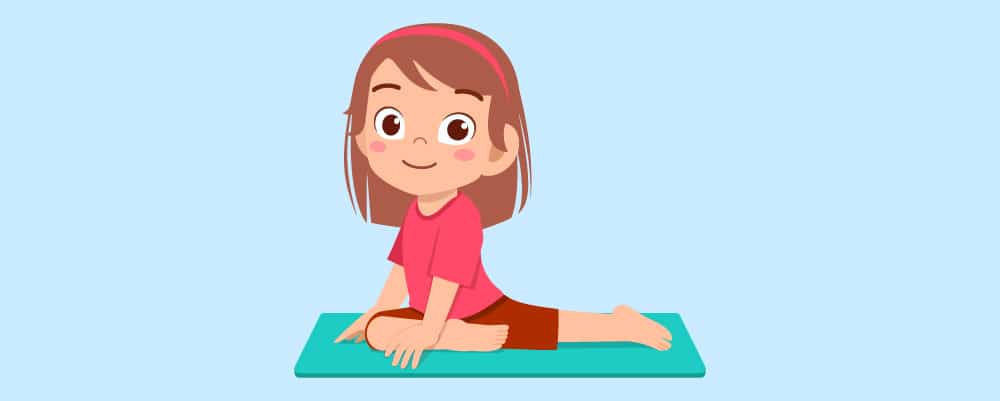
Children’s yoga combines physical movement, breath awareness, and mindfulness in a child-friendly format. It teaches body awareness and self-regulation skills that transfer directly to anxiety management. There are excellent free children’s yoga videos available on YouTube — Cosmic Kids Yoga is particularly popular and effective for younger children.
10. Progressive muscle relaxation
Work through the body’s muscle groups, tensing each one for 5 seconds and then releasing. Start with the feet, move up through the legs, stomach, hands, arms, shoulders, and face. The deliberate tension-and-release cycle teaches children the physical sensation of relaxation — many anxious children have chronic muscle tension and have forgotten what relaxed muscles feel like.
Make it fun for younger children by imagining squeezing lemons with their hands, stomping like an elephant, or making a screwed-up “lemon face.”
11. Wall push-ups
Pressing firmly against a wall engages the proprioceptive system — the body’s sense of its own position in space — which has a naturally calming effect. Have your child stand an arm’s length from a wall, place both hands on the wall at shoulder height, and slowly push in and release. This is particularly effective for children with sensory processing differences or ADHD alongside anxiety.
12. Animal walks
For younger children, animal walks combine proprioceptive input with playful engagement. Bear walks (hands and feet, bottom in the air), crab walks (face up), and inchworm walks all provide the kind of heavy physical input that regulates the nervous system. These are excellent transition activities — before school, before homework, before bed.
Creative and Expressive Activities
Creative activities give anxious children a way to externalise and process their feelings — getting worries out of their head and into a form they can observe, examine, and manage.
13. Worry journal

A dedicated notebook for worries. Children write or draw their worries, which externalises them from the mind and reduces their power. Some children benefit from a “worry time” — a specific 10-minute window each day where they write down their worries. Outside of worry time, when a worry arises, they write it down to address later. This teaches the brain that worries don’t need to be processed immediately.
14. Worry box
Children write their worries on small pieces of paper and post them into a decorated box. The act of “posting” the worry externalises it from the mind and gives children a sense of agency. Parents can periodically go through the box with their child — often the worries look much smaller on paper than they felt in the moment.
15. Art and drawing
Drawing or painting anxiety — giving it a shape, colour, size, and face — helps children gain perspective on it. Ask your child: “If your worry was a creature, what would it look like? How big is it? Does it have a name?” Giving anxiety a character can make it feel more manageable and less all-consuming. Some children enjoy drawing their “worry monster” and then making it smaller, locking it in a cage, or giving it a funny hat.
16. Slime and sensory play
Making and playing with slime, playdough, or kinetic sand provides repetitive, calming sensory input that engages the hands while quieting the mind. The tactile focus interrupts anxious rumination. For children who are sensory-seeking, this type of play can be particularly effective. Add lavender or chamomile essential oil to homemade playdough for an additional calming effect.
17. Colouring
Focused colouring — particularly intricate patterns — engages the prefrontal cortex (the thinking, reasoning part of the brain) and quiets the amygdala (the brain’s alarm system). It requires enough concentration to redirect attention from anxious thoughts without being so demanding that it creates additional stress. Colouring books designed for children — with interesting patterns rather than simple outlines — work best.
Mindfulness Activities
Mindfulness teaches children to observe their thoughts and feelings without being controlled by them — a skill that is particularly valuable for anxious children who are caught in cycles of worry.
18. Mindful eating
Choose a small food — a raisin, a piece of chocolate, a strawberry. Ask your child to examine it as if they’ve never seen it before. What does it look like? What does it feel like? What does it smell like? Then eat it very slowly, paying attention to every sensation. This simple exercise demonstrates the difference between automatic, anxious thinking and present-moment awareness — and it’s enjoyable, which matters.
19. Glitter jar
Fill a clear jar with water, glitter glue, and fine glitter. Shake it vigorously — the swirling glitter represents anxious thoughts. Then hold it still and watch the glitter settle. Explain that anxious thoughts are like the glitter — they feel overwhelming when stirred up, but if we pause and breathe, they settle. Children can shake and settle their jar during anxious moments as a concrete reminder that feelings pass.
20. Body scan
Guide your child’s attention slowly through their body, from feet to head, noticing any sensations without trying to change them. “What do you notice in your feet? Your legs? Your belly?” This practice builds body awareness — anxious children are often disconnected from their physical experience and don’t notice the early physical signs of anxiety until it’s already overwhelming.
21. Guided visualisation
Lead your child on an imaginary journey to a calm, safe place — a beach, a forest, a favourite room. Guide them with sensory detail: “What does it smell like? What can you hear? What does the ground feel like under your feet?” This activates the brain’s relaxation response and provides a reliable mental “safe place” the child can return to independently.
Cognitive Activities
These activities come from Cognitive Behavioural Therapy (CBT) and help children examine and challenge their anxious thinking patterns.
22. Worry rating scale
Create a simple 1–10 scale with your child, where 1 is “tiny worry” and 10 is “the worst thing I can imagine.” When anxiety arises, ask your child to rate it. This builds awareness that worries vary in intensity, and that most worries are in the 3–5 range rather than the 9–10 they feel in the moment. It also helps children track how quickly anxiety decreases when they don’t avoid.
23. Best, worst, most likely
When your child is worried about an upcoming event, work through three questions together: What is the worst thing that could happen? What is the best thing that could happen? What is most likely to happen? Most anxious children focus exclusively on the worst case. This simple exercise builds the habit of considering multiple possible outcomes — including realistic and positive ones.
24. Worry time
Designate a specific 10–15 minute period each day as “worry time” — a time when your child can worry as much as they like and you will listen. Outside of worry time, when a worry arises, write it down to address later. This teaches children that worries don’t need to be processed immediately, and that they have control over when they engage with anxious thoughts.
How to Use Calming Activities Effectively
Activities alone are not enough. How you introduce and use them matters as much as the activities themselves.
- Practice when calm — introduce these techniques during relaxed, playful moments, not in the middle of an anxiety episode
- Do them together — don’t send your child off to do breathing exercises alone. Do them alongside your child. This models the behaviour and strengthens your connection
- Let your child choose — offer a few options and let your child choose what resonates. Agency reduces anxiety
- Be consistent — regular daily practice is more effective than occasional use during crises
- Don’t use activities to avoid — calming activities should help your child manage anxiety so they can face difficult situations, not provide a reason to avoid them
- Celebrate effort, not outcomes — praise your child for trying, regardless of how well the activity worked. “I’m really proud of you for trying the breathing” matters more than whether the anxiety disappeared
Activities by Age Group
| Age group | Most effective activities |
|---|---|
| Preschool (3–5) | Flower and candle breathing, animal walks, sensory play, glitter jar, guided visualisation, art and drawing |
| Early school age (5–8) | Star breathing, 5-4-3-2-1, progressive muscle relaxation, worry box, colouring, yoga |
| Middle childhood (8–12) | Box breathing, worry journal, body scan, best/worst/most likely, worry rating scale, mindful eating |
| Adolescents (12+) | Box breathing, worry time, body scan, guided visualisation, progressive muscle relaxation, journal writing |
Frequently Asked Questions
What is the fastest way to calm an anxious child?
For immediate relief, belly breathing and the 5-4-3-2-1 grounding technique are the fastest interventions. Cold water on the face can also rapidly reduce physiological arousal. However, for children in acute anxiety, the most important thing is a calm, regulated adult presence. Your calm communicates safety more powerfully than any technique.
How do I help my child with anxiety at bedtime?
Bedtime anxiety is very common — the quiet of bedtime removes the distractions that keep anxious thoughts at bay during the day. A consistent bedtime routine is the most powerful tool: same sequence, same time, every night. Include a brief relaxation activity — progressive muscle relaxation, guided visualisation, or a body scan work particularly well at bedtime. A worry journal before bed can help children “unload” their worries before sleep. Avoid screens in the hour before bed as blue light disrupts melatonin production and makes sleep more difficult.
Should I let my child avoid things that make them anxious?
In the short term, avoidance reduces anxiety. In the long term, it maintains and grows it. Every time your child avoids a feared situation, their brain gets the message that the situation was genuinely dangerous — and the anxiety strengthens. Calming activities should help your child manage their anxiety well enough to face difficult situations, not provide a reason to avoid them. Gradual, supported exposure to feared situations — ideally with professional guidance — is the most effective long-term treatment for anxiety.
How long does it take for calming activities to work?
Breathing techniques and grounding exercises can produce physiological change within minutes. However, building lasting anxiety management skills takes consistent practice over weeks and months. Think of it like physical fitness — one workout doesn’t make you fit, but regular exercise over time transforms your baseline fitness level. Regular daily practice of calming techniques gradually changes how the nervous system responds to anxiety triggers.
Sources and References
Last verified April 2026.
- Kendall PC, et al. Cognitive-behavioral therapy for anxious children: Therapist manual. Workbook Publishing. 2010.
- American Academy of Pediatrics. Just Breathe: The Importance of Meditation Breaks for Kids. healthychildren.org. Updated 2023.
- Centers for Disease Control and Prevention. Data and Statistics on Children’s Mental Health. cdc.gov. Updated 2025.
- Algorani EB, et al. Coping Mechanisms. StatPearls. 2023.
- Black DS, Fernando R. Mindfulness training and classroom behavior among lower-income and ethnic minority elementary school children. Journal of Child and Family Studies. 2013.
Parenting Pod | parentingpod.com | Last updated April 2026 | Written by Ree Langham, Ph.D.
Summary